
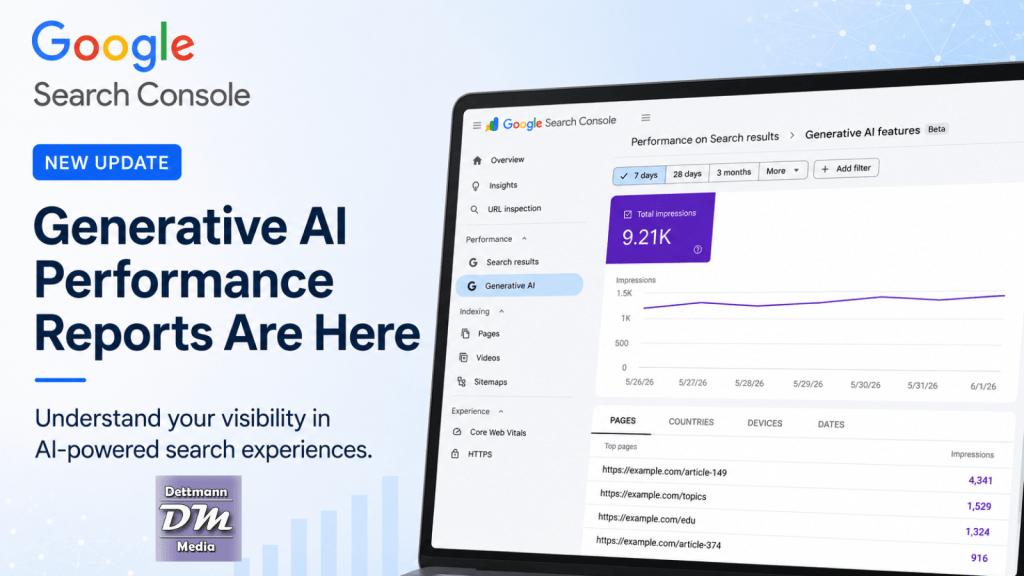
Google has officially announced a major update to Search Console reporting with the introduction of new generative AI performance reporting tied to AI-powered search experiences.
At first glance, this may sound like another technical update hidden deep inside Google Search Console.
It is not.
This update represents one of the clearest signs yet that Google is fully transitioning into an AI-first search environment, and businesses that understand this data early will have a significant advantage.
Additional Resources
Google Is Changing How Consent Works Between GA4 and Google Ads — Here’s What You Need to Know
The Modern Marketing Funnel: How AI Is Changing the Customer Journey
ChatGPT vs. Gemini vs. Claude: Which AI Tool Is Best for Your Business?
What Did Google Announce?
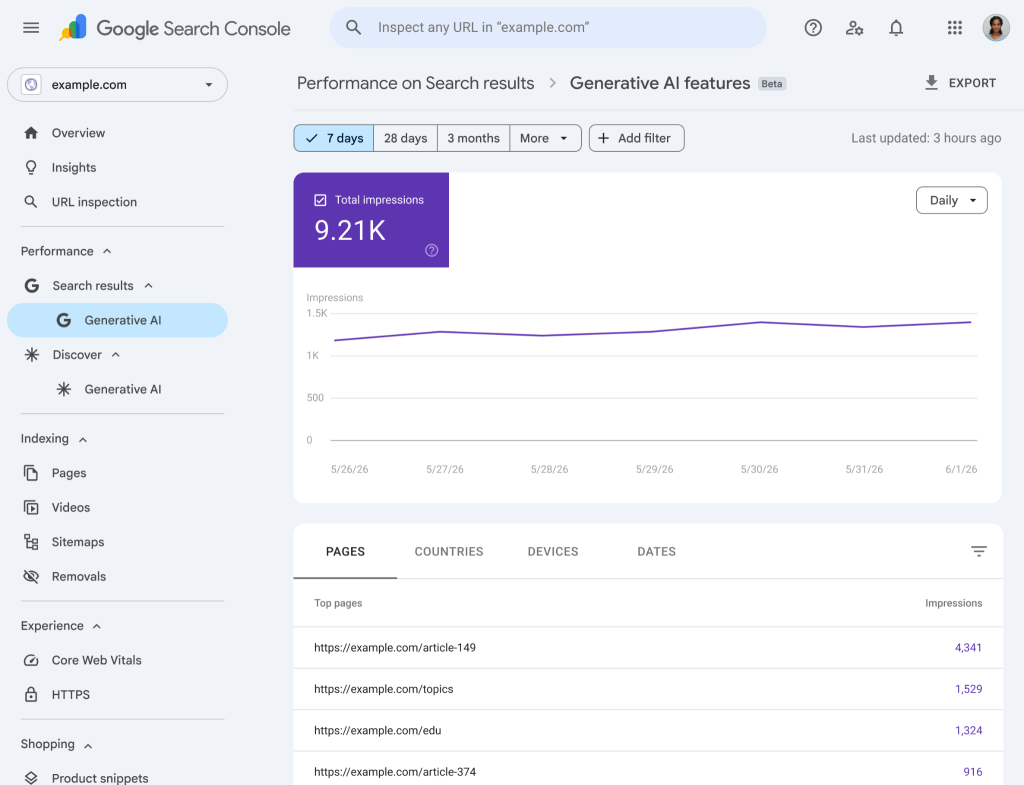
Google is expanding Search Console reporting to include performance data tied to AI-generated search experiences and AI Mode interactions.
In simple terms:
Businesses will now gain more visibility into how users discover their websites through AI-powered search results, not just traditional blue-link rankings.
This matters because Google Search is rapidly evolving beyond traditional search results into:
- AI Overviews
- AI-generated summaries
- Conversational search experiences
- Contextual recommendation systems
- Agentic AI search interactions
Google itself recently described this as “the biggest upgrade” to Search in more than 25 years.
“Today, we’re launching new Search Generative AI performance reports in Search Console, including dedicated reports for Search and Discover, to help you understand your site’s visibility within generative AI features on Search,” the company said in a LinkedIn post. “We’re rolling these reports out to a subset of websites, allowing us to thoroughly test and receive feedback before making them widely available.”
Why This Is a Major Shift for Analytics
For years, marketers primarily measured:
- rankings
- clicks
- impressions
- CTR
- conversions
- keyword traffic
Those metrics still matter.
But AI-powered search changes how users interact with content.
A growing number of users now receive answers directly inside AI-generated search experiences before ever clicking a website. Researchers studying Google AI Overviews have already documented major changes in how search visibility and click behavior function in AI search environments.
That means businesses need new ways to understand:
- How often their content appears inside AI search experiences
- Which pages are being referenced by AI systems
- Which queries trigger AI visibility
- How AI search impacts click-through behavior
- Whether AI exposure leads to conversions or awareness
- Which content formats perform best in generative search
This new Search Console reporting begins opening the door to those insights.
Traditional SEO Is Becoming AI Visibility Optimization
Search is no longer just about ranking #1.
Now it is also about:
- being cited
- being summarized
- being referenced
- being trusted by AI systems
- being contextually relevant
That requires a different mindset.
Businesses need content that demonstrates:
- expertise
- specificity
- topical authority
- structured information
- real-world experience
- strong technical foundations
Google has increasingly emphasized helpful, experience-driven content in AI search experiences.
In many ways, the businesses that deeply understand their audience and communicate clearly may outperform businesses simply publishing large volumes of generic content.
What This Means for Businesses
Most businesses are not prepared to interpret this shift yet.
Many organizations still struggle with:
- incomplete GA4 tracking
- disconnected attribution
- unclear conversion paths
- weak content structures
- outdated SEO reporting
- limited visibility into user intent
Now AI search data is being layered on top of all of that.
The businesses that succeed over the next several years will likely be the ones that can combine:
- SEO data
- AI search visibility
- conversion analytics
- customer behavior analysis
- first-party data
- content performance insights
into one unified strategy.
That is where analytics becomes far more valuable than rankings alone.
How Dettmann Media Helps Businesses Navigate This Shift
At Dettmann Media, we help businesses bridge the gap between marketing strategy, AI search visibility, and analytics reporting.
That includes:
- GA4 and Google Tag Manager implementation
- conversion tracking setup
- AI search visibility analysis
- SEO and AI optimization
- Search Console reporting interpretation
- funnel analysis
- content performance analysis
- executive reporting dashboards
- customer journey optimization
As Google continues integrating AI deeper into Search, businesses need more than surface-level traffic reports.
They need actionable insight.
The goal is no longer simply generating traffic.
The goal is understanding:
- what visibility actually leads to engagement
- what content drives conversions
- how AI search impacts customer behavior
- where opportunities exist before competitors identify them
The Bigger Picture
Google’s new generative AI reporting is not just another analytics update.
It is another signal that search behavior itself is fundamentally changing.
Businesses that adapt early will have a major advantage in understanding how users discover information in AI-driven environments.
The companies that wait may eventually realize they lost visibility long before they noticed a traffic decline.
AI search is already reshaping digital marketing.
Now the reporting infrastructure is beginning to catch up.









Leave a Reply