
AI and AI Search aren’t a fad anymore. It’s not MySpace (for my Gen-Xers out there). Remember, MySpace? We thought it was going to take over social media. At one time, it did. Where did Tom go?
This is not the case for AI and AI Search. It is way beyond the experimental phase.
Data research shows 75% of people use AI tools more than they did a year ago, with nearly half using AI search daily, if not more. At the same time, traditional search is on the decline. It is estimated search engine volume will drop 25% over the next year, according to Gartner, Inc.
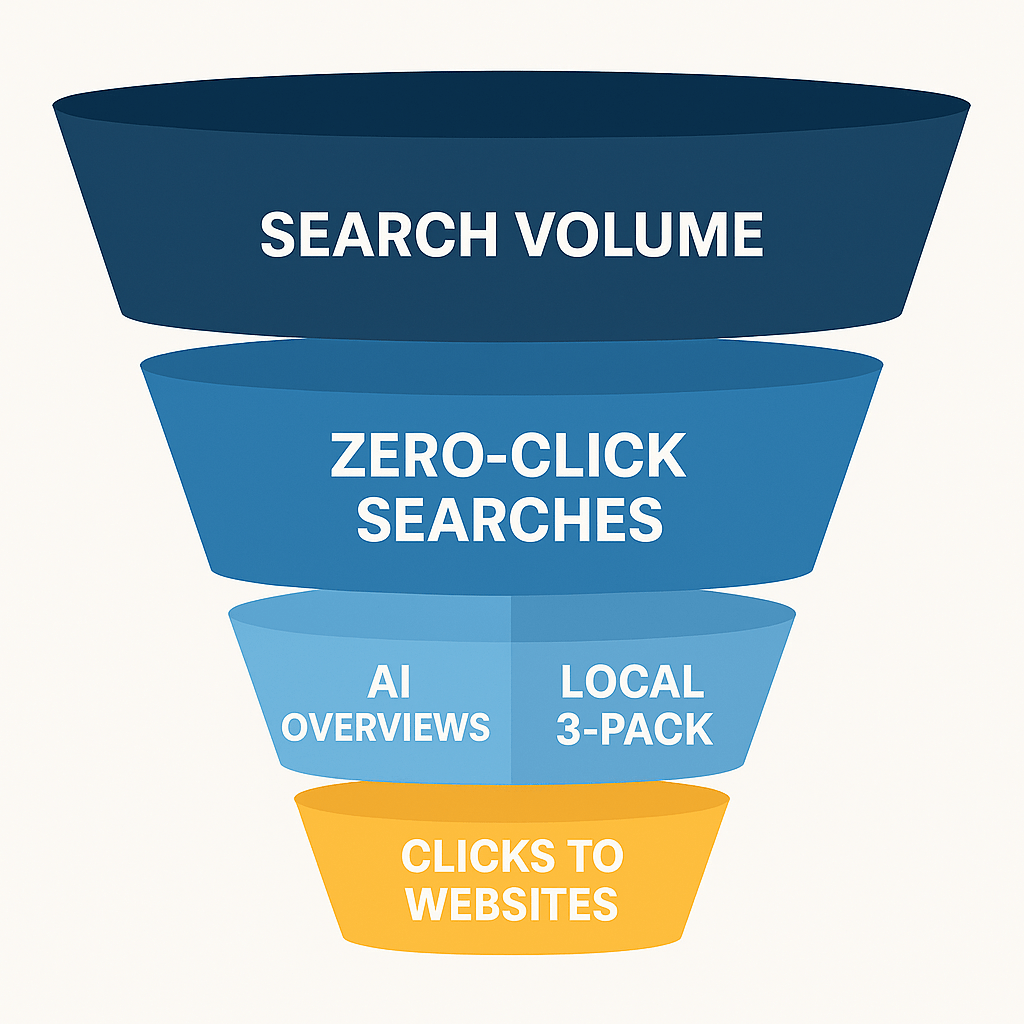
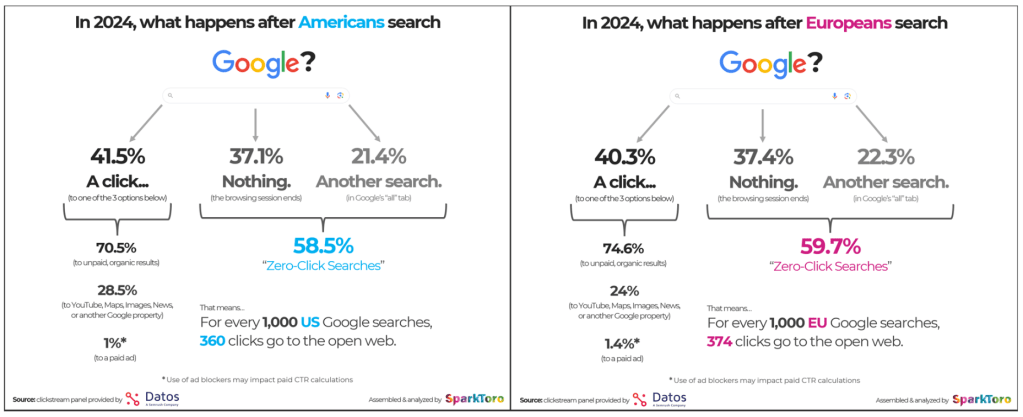
For example, Google’s AI Mode responds with real-time conversations with complex, multi-part questions with conversational answers. That has led to a surge in Google searches that don’t end with a click. Search Engine Land reports nearly 60% of all Google searches end without a click, often ending with AI overviews. In addition, about 30% of clicks go to a Google-owned property, and 36% of clicks go to the open web (a referral).
For businesses that rely on search visibility, such as asphalt repair, landscaping, HVAC, lawn care, electricians, roofers, plumbers etc., this shift changes everything about how people find and choose a business.
In short, Google is answering more questions directly on the results page with either AI overviews or the local 3-pack. It’s all about visibility as opposed to clicks.
Here’s how you can optimize for this shift:
What is Generative Engine Optimization?
Generative Engine Optimization (GEO) is the practice of shaping how your business, products, and content appear inside AI search engines. It’s the evolution of SEO for a world where people increasingly ask ChatGPT, Perplexity, Gemini, Claude, and other AI tools for recommendations instead of typing queries into Google.
GEO focuses on optimizing for AI-generated answers rather than traditional search engine results, such as the local three-pack. Instead of just ranking on a page of links, you’re aiming to become one of the trusted sources that an AI tool uses, cites, or recommends when generating its response.
GEO exists because consumer behavior has shifted.
- People ask AI tools for advice, comparisons, top local companies, or best product lists.
- AI engines pull from structured data, reviews, brand authority, freshness signals, and consistency across the web.
- If your business isn’t represented in those signals, you vanish from AI recommendations.
GEO is not keyword stuffing or chasing traditional rankings, or tricking AI, and is not limited to Google. It applies to all AI search systems.
How do you stand out and be visible in AI search?
AI tools thrive on providing answers to users, not recommendations. Hence, the zero-click search. It increasingly answers questions like:
- “Who’s the best asphalt repair company near me?”
- “Which lawn care company is reliable in Connecticut?”
- “Who are the top HVAC contractors in my area?”
If your business isn’t present in the AI’s training or retrieval layers, you will not appear in these high-intent queries.
An article by yext.com says 53% of AI users seek summarized, direct answers; 42% use Ai for creative ideas, or brainstorming help; 41% use AI for an in-depth nuance response.
Additional Insights
Choosing the right AI model for your marketing strategy
Five tips to stay visible in the zero-click world
- Strengthen your Google Business Profile
- This is your new homepage in many searches. Ensure: Perfect NAP consistency; Updated hours, services, and service areas; High-quality photos and short videos; FAQ section; Posts every week; Messaging enabled (if applicable)
- Encourage consistent reviews
- Google heavily prioritizes volume, velocity, freshness, and content of reviews
- Use structured data to control how Google reads your site
- Add or improve schema like: LocalBusiness, Service, FAQ, HowTo, Product, Review, Breadcrumb
- These provide Google answers it can display without requiring a click.
- Publish content that earns featured snippets
- Focus on quick, direct answers:
- “How long does asphalt sealcoating last?”
- “How to know if you need an HVAC repair?”
- Focus on quick, direct answers:
- Track non-click actions, not just website visits
- These include: phone taps, request-a-quote actions, map direction requests, appointment bookings, chat/message interactions, text/call-to-action buttons on GBP.
In closing
Zero-click search isn’t bad news. It’s simply a new reality. Businesses that adapt to this shift gain an edge because most competitors still treat SEO as “website rankings.”
The companies that win in 2025 will be those who optimize for being chosen, not just being clicked. Early adopters win the visibility battle. The sooner you adapt, the better your chances of being a source AI engines trust.
When it boils down to it, one long-time SEO tactic remains in place: think of search intent
Are you prepared?










Leave a reply to Web design matters to SEO – Dettmann Media Cancel reply